Founded on a simple yet profound gesture of grief turned generosity, Läkarmissionen has evolved from a Swedish newspaper appeal into a global humanitarian powerhouse. Today, the organisation operates in over 30 countries, from providing life-saving medical support in the Congo to vital initiatives expanding relief efforts in conflict-affected regions of Ukraine. By balancing immediate crisis response with long-term sustainable development, Läkarmissionen remains committed to its core principle: transforming the lives of the world’s most vulnerable people.
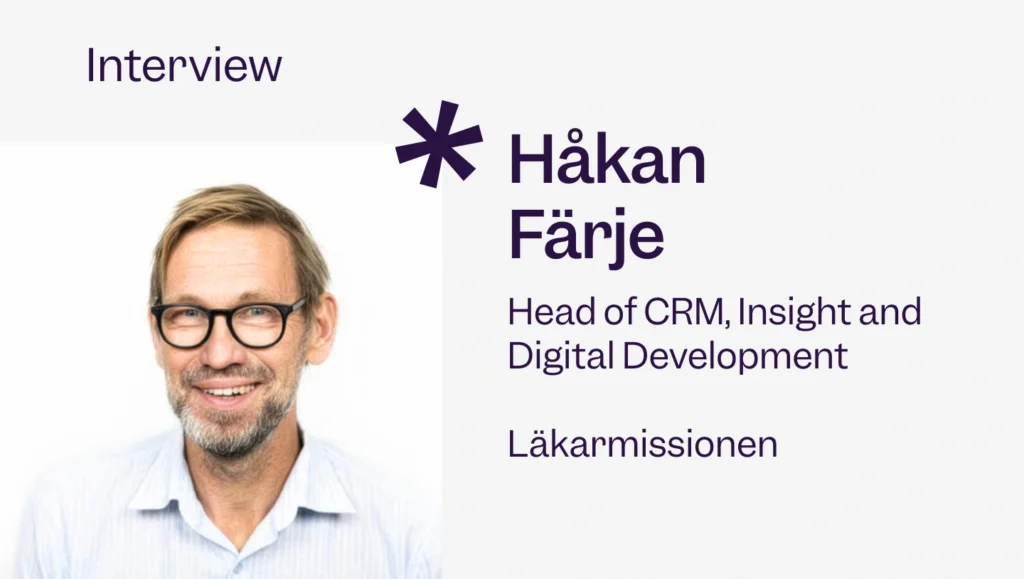
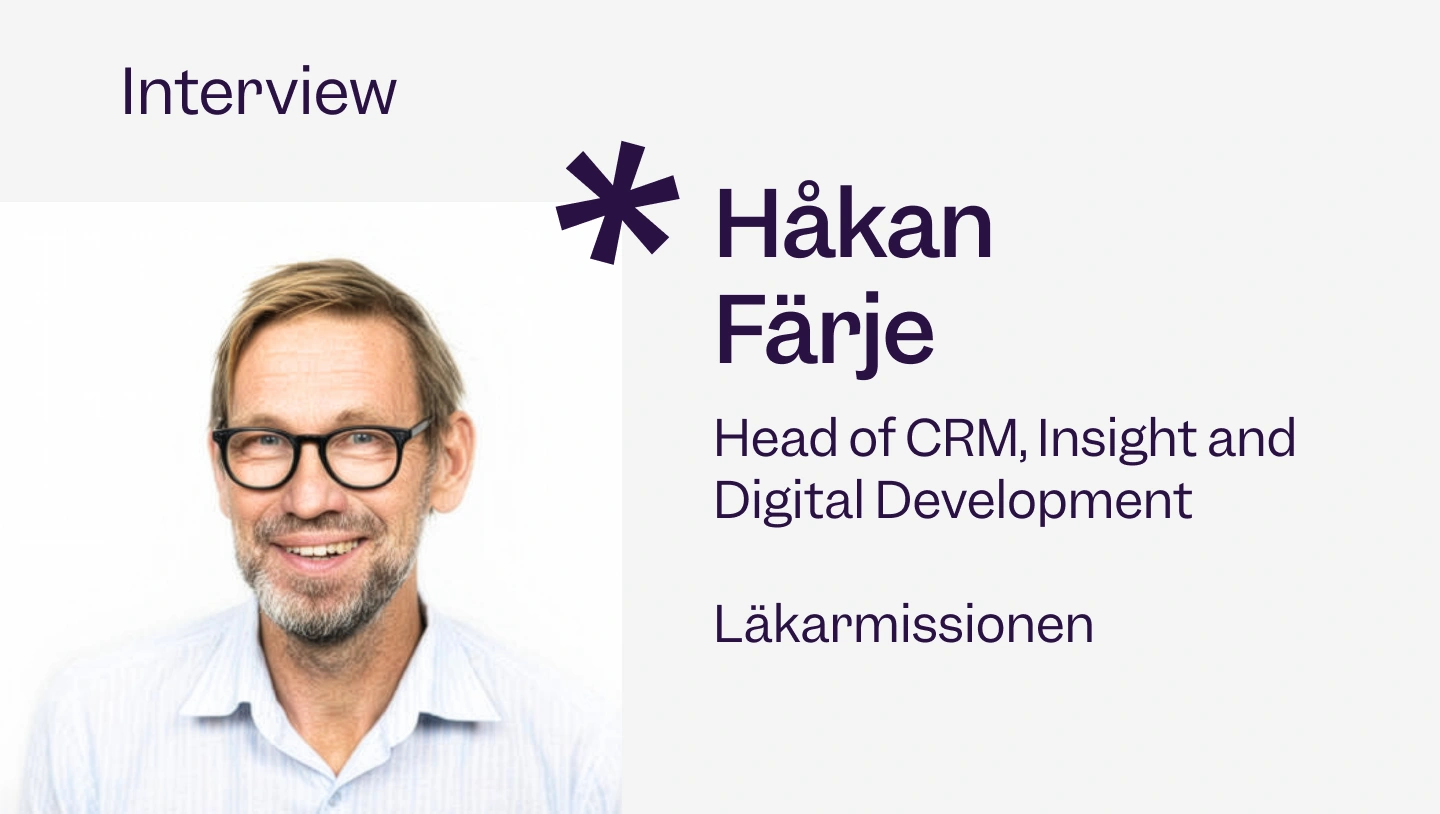
As traditional fundraising faces mounting challenges, how does a legacy NGO sustain its impact? In this interview, we speak with Läkarmissionen’s Head of CRM, Insight & Digital Development, Håkan Färje, for an inside perspective on digital-first giving. He explains the importance of creating a seamless donor journey and details how a technical partnership with Brite Payments is helping eliminate failed transactions – ensuring every possible krona reaches those in need.
Can you describe Läkarmissionen’s core mission today?
Håkan Färje, Head of CRM, Insight & Digital Development, Läkarmissionen: Our motto is “Dignified life, sustainable world.” We operate in 30 countries, primarily in Africa, with a focus on empowering individuals to improve their situations in various ways. For instance, we drill wells in Sudan, our largest country of operation, and support a hospital in Congo. Additionally, we have initiatives for street children in Ethiopia. We are currently significantly expanding our efforts in Ukraine. We previously operated a children’s care centre in Lviv, and we are now starting projects in Kyiv and Kharkiv as well.
What inspired the founding of Läkarmissionen, and how has it evolved?
Håkan Färje: The initiative began with an entrepreneur named Harry Lindquist, who owned the publication Swedish Journal. After the passing of his wife, he requested that instead of sending flowers, people donate money to a specific cause, which was a hospital in South Africa. He spread this message through his newspaper and magazine, leading to an overwhelming response and significant donations. This marked the inception of our efforts. Since then, we have expanded considerably and now operate in over 30 countries.
And do you have primary focus areas? How do you prioritise where to intervene?.
Håkan Färje: We focus on areas of greatest need and prioritise collaboration with other organisations and networks. If opportunities arise and we have partners to work with, this collaborative approach will guide us in the right direction.
What are your biggest financial or operational challenges?
We primarily work in Sweden and private-sector fundraising, but the environment is challenging right now. For instance, large institutional donors, such as the Swedish aid organisation USAID, are downsizing and altering their contributions. This presents a significant challenge when we seek project grants from external partners. While we have substantial funding from, for example, UNICEF, we mainly rely on international networks and organisations, as well as support from state entities.
Do individual donors donate as well?
Håkan Färje: They do. I’m not sure about the figures because we haven’t prepared this year’s annual report. But last year we had about one-third from private donors and two-thirds from institutional donors; it changes every year, but I would say it’s a mix of both.
What are some of the biggest challenges you face in fundraising today, and how do you address them?
Håkan Färje: One of the challenges we face in fundraising is that our primary methods – writing letters and making phone calls – are becoming increasingly costly and difficult to utilise. Many people no longer answer calls from unknown numbers because their phones often identify them as “spam calls.” Additionally, postal mailings are becoming more expensive, and we are seeing a steady decline in response rates. This shift represents a significant challenge for our fundraising efforts.
When it comes to donations, why is it crucial to make the donation process as easy and friction-free as possible?
Håkan Färje: Autogiro is a significant source of our revenue, making up about one-third of our total income. This means it’s crucial for us to attract new donors, especially since we lose donors each month who opt out. To prevent a decline, we need to create a system that supports growth and minimises friction for our donors. Therefore, the Brite account information service (AIS) process is essential to ensuring everything runs smoothly.
Apart from Brite, what other payment options do you use?
Håkan Färje: Brite currently works with Autogiro, the only recurring payment solution available at this time. We also use SwedBank Pay for our online payments. We are considering incorporating Google Pay and Samsung Pay, among other payment methods, but I don’t believe they will be game changers. Swish remains the leading payment method in the market.
How does Läkarmissionen maintain transparency with donors about their contributions and how they are used?
Håkan Färje: We prioritise following up with donors after they contribute to specific causes by providing updates on how their donations have been utilised. For instance, when we organised a vaccine fundraiser in Congo, we informed all our donors once the vaccines had successfully reached remote villages in the region.
As a member of Giva Sverige, which represents fundraising organisations, we are committed to transparency. We make various information available on our website, including our annual report and the salary of our CEO. Additionally, we comply with regulations established by 90-konto, an organisation that ensures no more than 20% of our income is allocated to administrative costs. Currently, we maintain overhead expenses at 11%, reflecting our commitment to efficient resource use.
For someone interested in supporting your work for the first time, what is the best way for them to make their first donation?
Håkan Färje: Through our website because it’s simple, offers several donation options, and is brand new. We released it in October last year.
Why did you choose Brite Payments as a payments technology partner?
Håkan Färje: We had a similar function on our old website, which didn’t work very well at all. There were many failed transactions and errors. So then I looked at another supplier for this service to look up people’s accounts for signing up to Autogiro, and I got good recommendations from other organisations using you. So that’s why we chose Brite.
Which Brite products do you currently use?
Håkan Färje: We use the AIS account information service (Data Solutions). That’s the only product we’re using presently.
What is the specific problem that Brite’s Data Solutions helps you resolve?
Håkan Färje: Fewer failed transactions are extremely important for us, because the Autogiro donors are so important to us, as donors often cost a lot of money to recruit. So a failed transaction is very costly for us. Reliability of the technology was another reason we chose Brite.
How has Brite’s customer support been during your integration?
Håkan Färje: The integration was really great. We had contact with the team in Germany, who were very helpful and responded quickly to any issues. I haven’t had much contact with support after launch, to be honest.
Do your donors benefit in terms of speed and user experience since you began offering this flow?
Håkan Färje: I believe it’s an efficient system. Not all fundraising organisations have similar systems, and compared to manually writing down the account number, which few donors know by heart, looking it up at the bank can be cumbersome. This automated approach is much more user-friendly.
People often make mistakes when clearing numbers; for example, Swedbank uses a five-figure clearing number, and omitting one digit can lead to complications. This results in a lot of manual work to correct the error and contact the donors. Overall, it becomes much more complicated if you can’t automate that process.
Did you have a previous payment process for this?
Håkan Färje: We had a similar process before. But it wasn’t up to the standard that we needed as an organisation; we simply had too many failed transactions.
Can you summarise Brite in three words?
Håkan Färje: I think Brite is “an easy solution”. The service is smooth and easy for the donor, and the flow just works.
If you would like to support the work of Läkarmissionen or want to know more about the organisation, click this link to visit their website.
If you would like to learn more about how Brite improves the donor journey and makes it easier to receive one-off and recurring donations, visit our charity and nonprofit page. Or if you would like to learn more about Läkarmissionen and how they work with Brite, then follow the link to the case study below.